You Are Not Weak.
Your Brain Has Been Hijacked.
A confessional letter to the man who has prayed, fasted, deleted every app — and still relapsed last week.
You know the cycle. You have lived it so many times you could draw it in your sleep.
It starts when you are tired. Or bored. Or stressed. Or lonely after a long phone call that did not go the way you wanted. Something tightens in your chest — not quite a thought yet, just a pull. Within minutes your mind is already moving toward it, even while another part of you is saying not again.
You try to pray. You pick up your Bible. You open a sermon on YouTube. For a few minutes, the tide holds. Then it doesn't.
Afterwards, the shame arrives like a familiar visitor. You lie in the dark and inventory the damage—the promise you made, the fast you broke, the sermon you preached last Sunday, the woman planning a wedding with a man she does not truly know.
And then comes the most dangerous thought of all: Maybe this is just who I am.
It is not. But willpower, prayer and deleted apps will never be enough to prove that. Not because your faith is too small — but because nobody has ever shown you how your brain actually works, and why it keeps winning the fight no matter how hard you resist.
That changes today.
"Here's What Nobody Told You"
Every accountability partner, every pastor, every Christian recovery forum gave you the same advice: pray more, resist more, be stronger.
None of them told you about dopamine.
When pornography enters your brain, it floods your reward circuitry with dopamine — the same chemical that fires when you eat, achieve something, or fall in love. But pornography produces a spike so extreme that your natural reward system cannot compete with it. Over time — and especially when you started at the age of 14 — your brain rewired itself around that signal. Over time, the habit carved deep pathways in your brain. Pathways that felt familiar. Automatic.
This is what Dr. Judson Brewer, a neuroscientist at Brown University, calls the craving loop: trigger → craving → behaviour → temporary relief → repeat. It is not a character flaw. It is a learned pattern running quietly in the background of your life, activated by emotions you may not even consciously recognize as triggers.
Charles Duhigg, who spent years researching how habits form and break, puts it simply: you cannot extinguish a habit loop by willpower alone. You can only replace it — but only once you understand what need the habit is trying to meet.
What this means for you
Every time you relied on willpower alone and gave in to temptation, it was not a spiritual failure. Your brain was running patterns that had been reinforced thousands of times since you were a teenager. Willpower gets tired. Habits do not disappear overnight.
The solution is not more willpower. It is retraining—reshaping the habits and thought patterns that have governed your life for years, while partnering with the Holy Spirit, who Scripture says is already at work renewing your mind. Neuroscience does not replace your faith. It simply provides practical tools that can help you align your daily actions with the transformation your faith has always called you toward.
I Was 30 Years Old and Still Losing the Same Fight I Started at 14
My name is David. I grew up in Akwa Ibom State, and I am an accountant. Nothing glamorous about that introduction — I say it because I want you to know I am not a pastor writing from a pulpit, or a therapist writing from a comfortable office. I am a man who fought this thing for sixteen years before I finally understood what I was actually fighting.
The first time I saw pornography, I was fourteen years old. A classmate in secondary school passed a phone across a wooden desk and said "David, look at this." I looked. And something in my brain clicked open that I would spend the next sixteen years trying to close.
At fourteen, I did not understand addiction. I did not understand dopamine. I only knew that something about those images made me feel temporarily less anxious, less invisible, less like the quiet boy from Uyo who did not know how to talk to girls. Within months it was a routine. By the time I finished secondary school, it was architecture—built into the structure of how I coped with loneliness, stress, rejection, and anything else that hurt.
University brought more access and more shame in equal measure. I gave my life to Christ properly at nineteen — a real encounter, not just a family tradition — and the guilt that followed every episode became unbearable. I would go to fellowship on Friday night still carrying what I had done on Monday. I learned very quickly how to wear a face that said "I'm fine."
By my mid-twenties, I had tried everything I knew to stop. Let me be specific, because I know you have probably tried some of these too:
The Fasting Strategy. Three-day fasts, seven-day fasts. I genuinely believed that if I could demonstrate enough spiritual seriousness, God would lift the desire. He didn't. Or rather — He may have been doing something in me spiritually — but the habit loops in my brain did not care that I had not eaten. Day four of a fast, I relapsed. I felt so disgraced I didn't return to church for two weeks.
The App Deletion Method. I deleted everything. Browsers restricted. Social media gone. I put a parental control on my own phone and gave the password to my cousin Emmanuel in Calabar. Within eleven days I had found a way around it because the urge doesn't live in the app. It lives in the habits beneath it. And you can't delete those from the App Store.
The Accountability Partner. I told a friend from church, and we agreed to check in every day. It lasted six weeks. He relapsed and disappeared. I relapsed and felt too ashamed to reach out first. Now we see each other at church and act as if the conversation never happened. Because accountability built on shame eventually collapses under the weight of the truth.
The Willpower Streak. My personal record was thirty-one days. I was almost proud of it. I told no one because I was afraid saying it aloud would jinx it. On day thirty-two, a combination of loneliness and a slow Tuesday evening ended it in about fifteen minutes. I remember sitting with my phone afterwards and thinking: I cannot do this. I am never going to be free.
The Promise to God. I've lost count. Some promises I made kneeling on a concrete floor. Some I made with tears running down my face. Some I made with the Bible open in front of me. The promises were real. The desire to change was real. But desire alone could not undo a pattern that had been reinforced for sixteen years. I did not understand that then. I just thought I was broken.
The turning point did not come from a revival service or a midnight prayer. It came from a book.
I was sitting in my room in Port Harcourt, on a Saturday afternoon in the dry season — the fan was humming, the light was low — and I was reading Charles Duhigg's The Power of Habit. I had picked it up because someone in a Facebook group mentioned it had nothing to do with pornography. That appealed to me. I was tired of content that made me feel like a case study instead of a person.
And there it was — the cue, routine, reward loop. The science of why we do what we do when we don't want to do it. I read the chapter twice. I sat up in my chair. I thought: This is what has been happening to me since I was fourteen.
Not sin. Not weakness. Not a lack of God's grace. A habit loop that had never been properly interrupted.
I did not abandon my faith. I doubled down on it. But now I understood what I was asking the Holy Spirit to work with. I started mapping my triggers — not in a clinical way, but in a practical one. I learned that my most dangerous time was not midnight. It was 4:30 PM on slow days. I learned that the trigger was not lust — it was loneliness and understimulation. I started building replacement habits that could meet those needs before the craving reached full voltage.
I started studying Judson Brewer's research on craving and mindful awareness. I realised that the moment I started noticing the craving without immediately reacting to it — just sitting with it, naming it, understanding what it was trying to give me — its grip on me began to weaken. Not overnight. But gradually, and in ways I could actually feel.
I combined this with structured prayer — not the desperate "God please help me prayer (which I had done for years)", but intentional, positioned prayer — praying in advance for the 4:30 PM hour, asking the Holy Spirit to be specifically present in the specific moments I was most vulnerable.
By Day 90, I had broken the longest streak of my life. More importantly, I understood why it had held. I wasn't relying on willpower anymore. I was operating differently.
I wrote everything down: the trigger-mapping tools, the replacement-habit templates, and the relapse-recovery protocol. I did stumble twice during those ninety days, but learning how to recover without letting shame pull me into a full relapse was a breakthrough in itself.
I compiled it into a system. This is that system.
The Transformation Timeline — Day by Day
This is not a highlight reel. This is the honest record of what changed, when, and why.
-
D1
Day 1 — Clarity, Not Celebration
I completed the Trigger Mapping tool for the first time. Writing down the specific times, emotional states, and places where I was most vulnerable felt strange—almost clinical. But seeing everything on paper removed the mystery. It wasn't an uncontrollable urge. It was a pattern. And patterns have schedules.
-
D5
Day 5 — The First Real Test
Thursday afternoon. Exactly the danger zone I had mapped. Right on schedule, the craving arrived. Instead of fighting it, I did what the protocol said: I named it. "This is a craving. It's trying to give me relief from boredom." Then I executed the replacement habit—a twenty-minute walk around the estate. The craving passed. Not dramatically. Quietly. I almost didn't notice it happening.
-
D7
Day 7 — Something Different in Church
I sang during worship without thinking about last week. That sounds small. It was enormous. For years I had stood in that sanctuary carrying Monday to Saturday behind my eyes. This Sunday felt different. Not because I was perfect, but because, for the first time in years, I was building a new life instead of simply trying to survive the old one.
-
D12
Day 12 — First Stumble. No Spiral.
I slipped. It was a Tuesday night and I had skipped journalling for three days. But the relapse-recovery protocol was there when I needed it: three steps, no shame spiral, back on my feet within twenty-four hours instead of disappearing into the usual three-week hole of guilt and self-loathing. This was new. This was different from every previous attempt.
-
D21
Day 21 — The Neural Shift
Research suggests 21 days is the point where new neural pathways begin to gain traction against old ones. I cannot confirm the science in a lab, but I can tell you: by Day 21 the pull felt different. Still present, but less automatic. Less like an ambush and more like a choice I could see coming and prepare for.
-
D45
Day 45 — Confidence Returned
I looked in the mirror and did not feel like a fraud. A small thing. And also the most significant thing. My performance at work improved. My prayers became less desperate and more conversational. I stopped dreading Sundays.
-
D90
Day 90 — Not the End. The Beginning.
Day 90 was not a finish line — it was the moment I understood that freedom is not an event you arrive at, it is a system you maintain. But I was different. The man who reached Day 90 was no longer relying on willpower alone. He was operating from new patterns, new habits, and new expectations of himself. That was the point of the whole system.
What Others Are Saying
Reviews shared with permission. Names withheld at users' request.
I don't even know where to start. I've been trying to stop this thing since 2019. Almost seven years now. I've done everything. Nothing worked for more than a few weeks. The trigger mapping section alone changed how I see this whole fight. I understand now why Sunday evenings were my worst time. I understand what was actually happening. Mehn, this book no be church talk wey you don hear before. Na different thing entirely. The Day 21 marker was real for me. I felt it shift. I'm at Day 38 now. Still going.
I bought this three days before my introduction ceremony. My fiancée doesn't know about this part of my life. I was terrified going into the marriage. The Partner Disclosure Guide in the bonus section — I cried reading it. It gave me language I didn't have. It helped me see that telling her was not destroying something, it was choosing to build something real. I haven't told her yet but I now believe I can. The system itself is working. I'm on Day 19. First time in four years I've felt hope instead of just guilt.
The part wey shock me most na how e explain the dopamine thing. I always think sey na spiritual weakness. I don go for deliverance twice. Nobody ever tell me say my brain don form pattern wey need replacement, not just prayers. Omo, That one hit different. E no mean say prayer no work, e mean say I been dey pray but i been no understand wetin I dey fight. The replacement habit system dey very practical. You no go dey guess. Every step dey there. This blueprint don open my eyes. Day 54 and I never look back since.
Being far from home, far from my church, and in a completely new country made everything worse. I was using porn to cope with the loneliness — I just didn't know that was what I was doing until I completed the trigger mapping. I've tried going cold turkey so many times. This is the only system that has ever helped me understand why. The relapse-recovery protocol, especially, changed everything for me. I stumbled on Day 15, but instead of it destroying all my momentum, I was back on track by that evening. Honestly, that one lesson alone was worth every naira I paid.
I will be honest. I was skeptical. I've bought Christian books on this before, and they all seemed to say the same things. This is not the same thing. The neuroscience integration is real, it's not just thrown in for decoration. And it doesn't make you feel like God is being replaced by a formula. My favourite parts were the prayer sections because they showed how faith and practical tools can actually work together. My productivity has improved. My marriage is different. My wife sef don notice say something don change. She no even know exactly wetin change, but she dey feel am. I know what changed.
Introducing: The 90-Day Porn Recovery Blueprint For Christian Men
A step-by-step neurological and faith-integrated system for breaking pornography addiction before it destroys your mind, relationships and purpose.
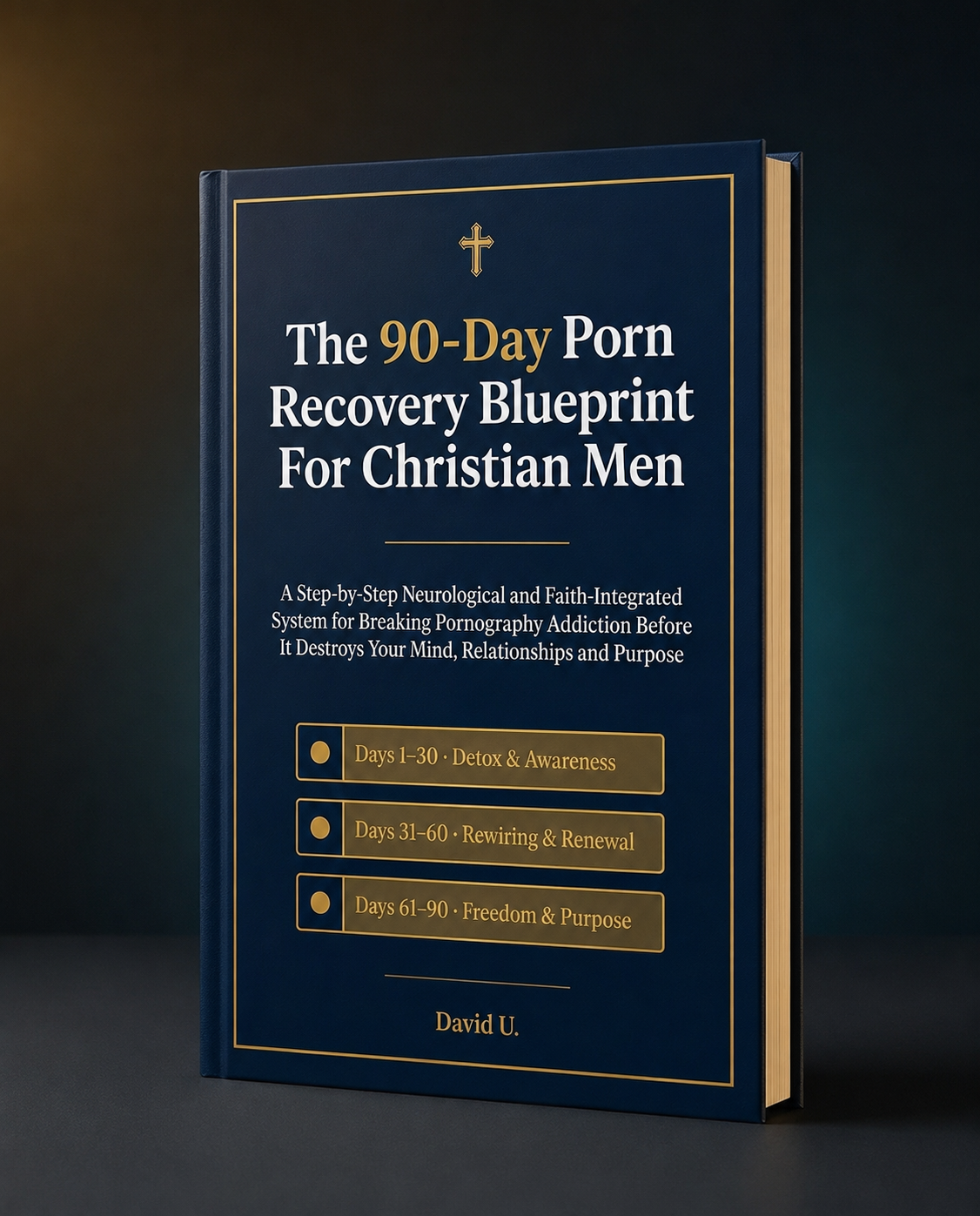
This is not a devotional. It is not a collection of Bible verses you already know. It is a structured, day-by-day protocol built from what actually worked — after sixteen years of failure, months of serious study, and the hardest, most honest work I have ever done on myself.
Here is everything inside:
- Introduction: Why Everything You've Tried Has Failed Pages 1–8 The foundational reframe — understanding the neurological and spiritual terrain you're actually fighting on. Read this first, even if you are tempted to skip to the protocol.
- Part One: Understanding Your Brain — The Dopamine & Habit Loop Explained Pages 9–22 Plain-language neuroscience drawn from Judson Brewer and Charles Duhigg's research. No jargon. No PhD required. You will finish this section understanding your own cravings for the first time.
- Part Two: Faith as Infrastructure — How Prayer and Protocol Work Together Pages 23–32 This is not a section about trying harder. It is a section about positioning your spiritual life properly against what the science tells us about habit change — so your prayers translate into practical transformation, not just temporary relief.
- Part Three: The Trigger Mapping System Pages 33–45 A structured, fillable framework for identifying your personal cue-craving-routine loops. You will map the times, emotional states, environments, and internal triggers that drive your specific patterns. This is where the real work begins — and where most men experience their first major breakthrough.
- Part Four: The Day-by-Day 90-Day Protocol Pages 46–89 The full structured programme — daily instructions, weekly review prompts, replacement habit assignments, and prayer frameworks for every phase of the 90 days. You will never wonder what to do next.
- Part Five: The Relapse Recovery Framework Pages 90–98 Because stumbling does not mean the system failed. This three-step protocol stops a stumble from becoming a shame spiral — and gets you back on your feet within twenty-four hours instead of losing weeks to guilt and self-condemnation. This section alone is worth the price of the entire program.
- Part Six: The Partner Disclosure Guide Pages 99–110 A compassionate, practical guide for the man who knows he needs to tell his fiancée, his wife, or his accountability partner — but does not know where to begin. Inside, you'll find the exact language to use, a framework for choosing the right time, and guidance for navigating the difficult conversation that follows. Written specifically for the Nigerian and broader African cultural context.
- Part Seven: Long-Term Freedom Maintenance Pages 111–120 What to do after Day 90. Because freedom is not an event; it is a system you maintain. This section gives you a quarterly review framework and a lifelong habit architecture designed to keep everything you have built from slowly collapsing over time. .
The Bonus Stack
Two tools built specifically to make the protocol actually work in your real life — not just in theory.
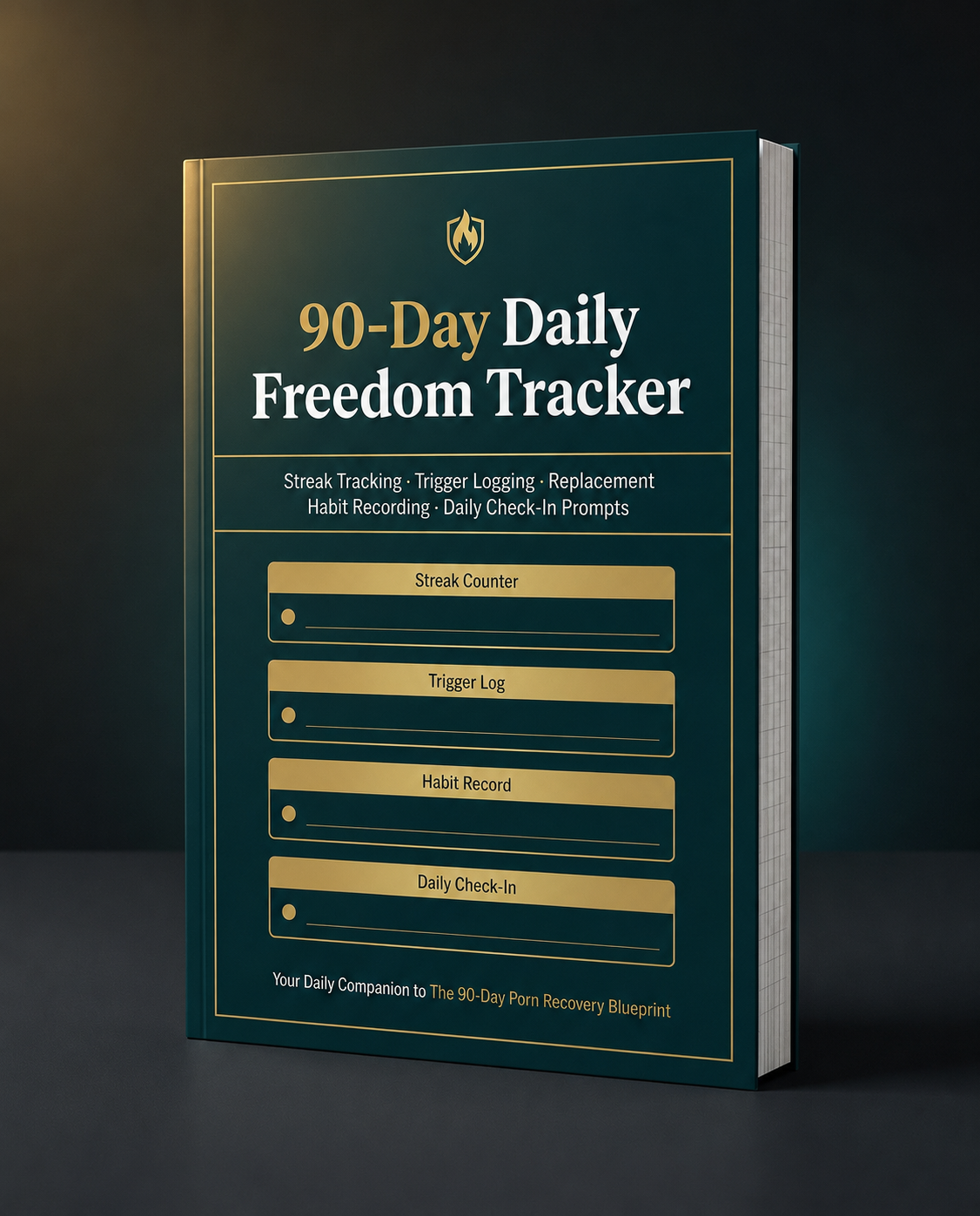
The 90-Day Daily Freedom Tracker
Standalone Value: ₦5,000 — Yours Free
This is not a simple streak counter. The Daily Freedom Tracker is a structured daily check-in system that combines streak tracking, trigger logging, replacement-habit recording, and guided reflection — all in a single tool designed to work alongside the main protocol. Most men who fail at recovery do not fail because they lack motivation; they fail because they lose visibility into their own patterns. This tracker keeps you honest, helps you see your progress clearly, and gives you the data you need to identify your relapse triggers before they blindside you. Print it. Use it every day. It is one of the most powerful components of the entire system.
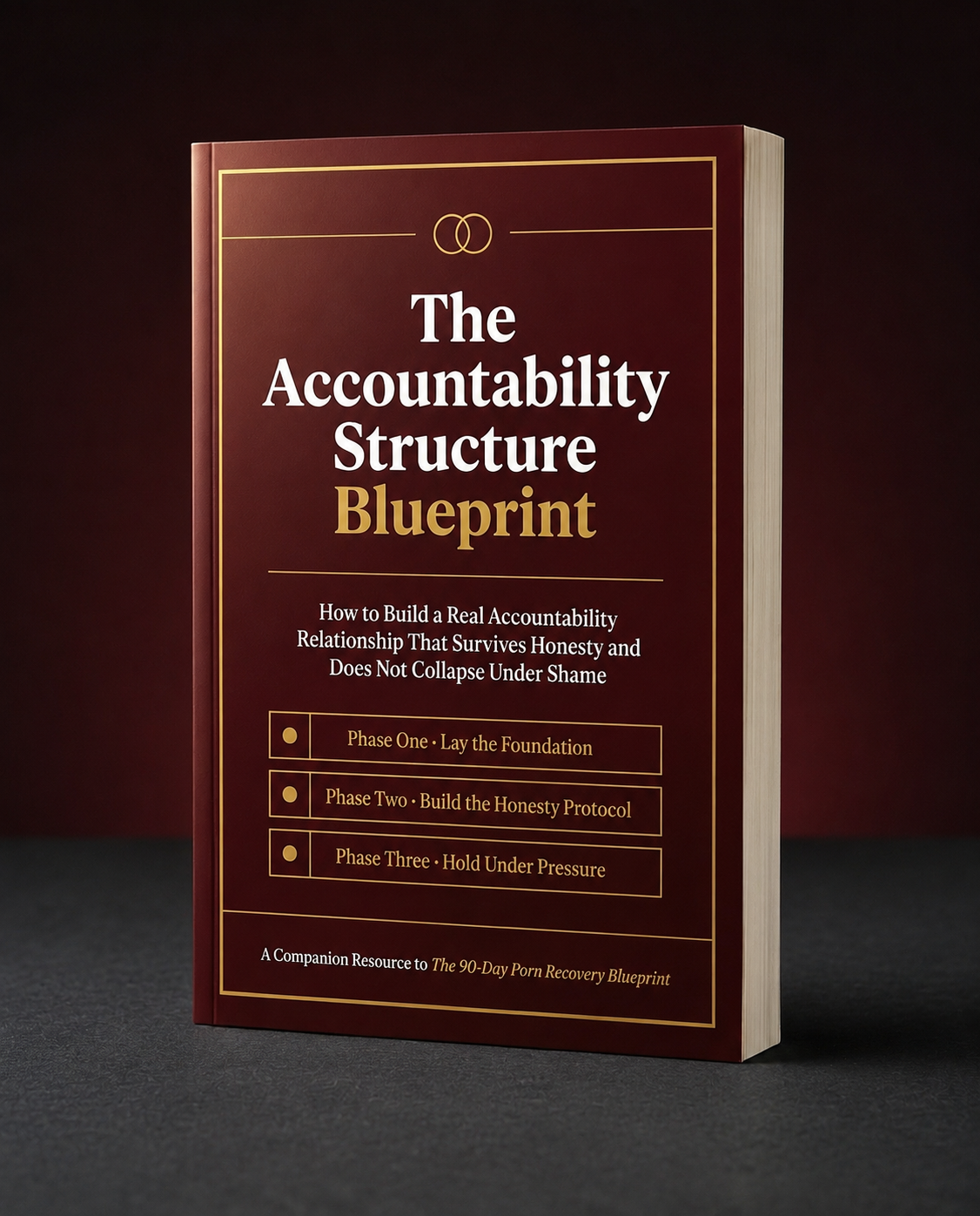
The Accountability Structure Blueprint
Standalone Value: ₦4,500 — Yours Free
Most accountability partnerships collapse within six weeks — not because of dishonesty, but because they were built on the wrong foundation. They run on shame instead of structure, and shame cannot carry the weight of this level of transparency for very long. This blueprint shows you how to build a real accountability relationship: how to choose the right person, how to have the first conversation, what to share and when, how often to check in, and how to keep the relationship intact even after a relapse. More importantly, this is not just a guide for you — it is a guide your accountability partner needs to read as well. Designed specifically for the Nigerian and broader African church context, it addresses the unique shame, silence, and cultural pressures surrounding this struggle, while showing how genuine community, used wisely, can become one of the most powerful forces for lasting freedom.
Everything You Get Today
One complete system. No monthly fees. No upsells. Instant download.
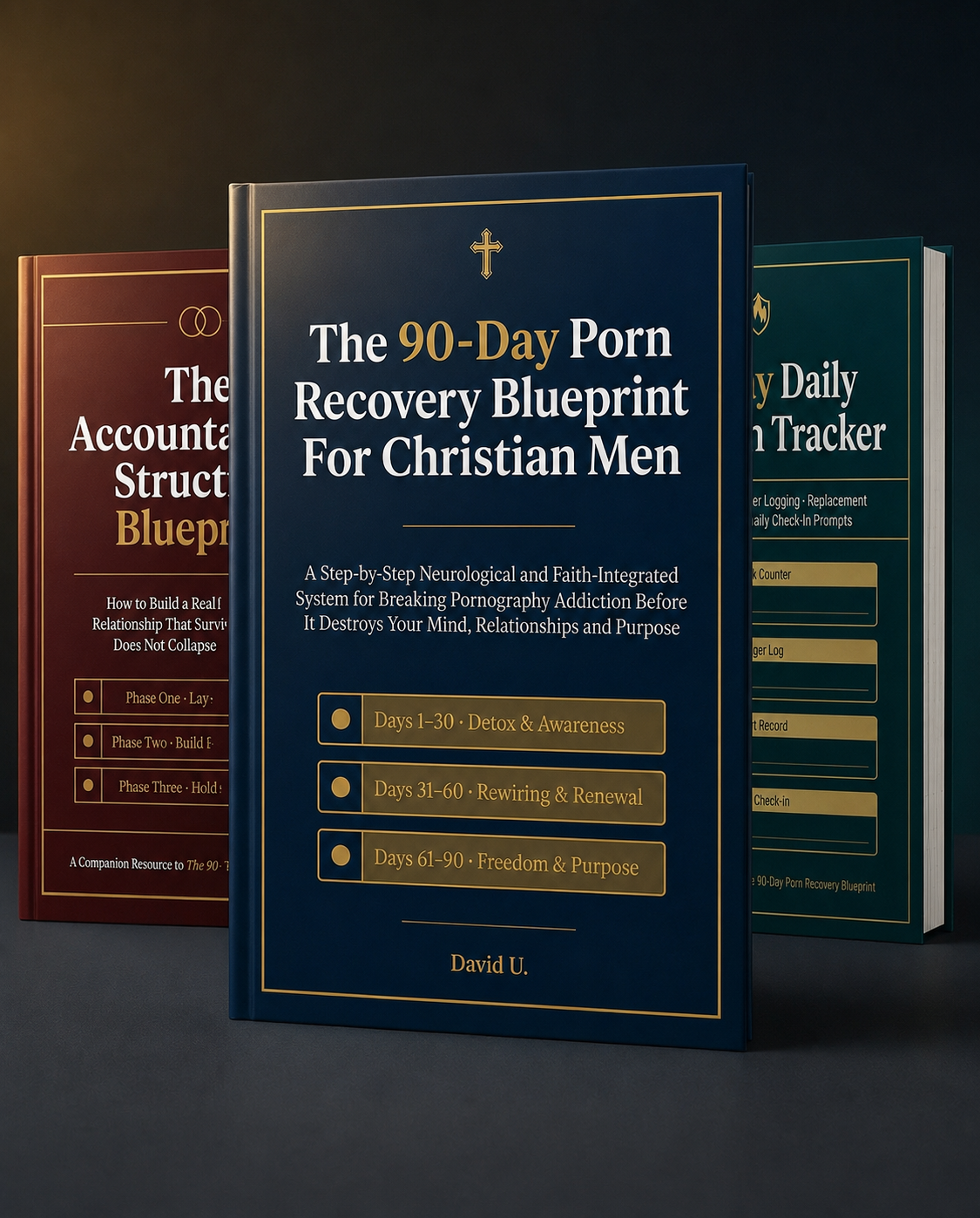
- The 90-Day Porn Recovery Blueprint (120-page PDF) ₦19,800
- Bonus 1: 90-Day Daily Freedom Tracker ₦5,000
- Bonus 2: The Accountability Structure Blueprint ₦4,500
⚠ Price rises to ₦14,800 after 30 sales. Order before the counter hits.
MONEY
BACK
The 60-Day "Follow the System" Guarantee
We don't expect you to simply read this book.
We expect you to use it.
If you have worked through the lessons, completed the exercises, and sincerely applied the system for at least 60 days — but you honestly believe it has not helped you make meaningful progress — send us an email.
We will refund every penny.
The risk is on us. You have been carrying this alone for long enough. You should not have to risk your money on top of everything else.
Two Paths From This Moment
The cycle continues.
You close this tab. The guilt from last week fades a little. You make another private promise. Next Sunday you stand in church. Wednesday comes. Thursday evening arrives — 4:30 PM or whenever your danger hour is. The pull comes. You fight it. You lose. Your fiancée plans a wedding with a man she doesn't fully know. Nothing changes because nothing changed.
21 days from today.
You know your triggers by name. You have survived your danger hour four times using the replacement protocol. You have not stumbled — or you have stumbled once and recovered in 24 hours instead of three weeks. You stand in church on Sunday morning without that familiar shadow behind your eyes. Your prayers are different. Your mornings are different. You are not at the finish line, but for the first time, you believe you are on the right road.
P.S. The 60-Day "Follow the System" Guarantee is real and it is unconditional. If you work the protocol for 60 days and feel it has not moved you forward, email us and we will refund every naira. You have nothing to lose except the habit that has been costing you for years.
P.P.S. The price is just ₦9,800 while the first 30 copies remain available at this rate. After that, the price rises to ₦14,800 — and it will not come back down. If you close this page, plan to return later, and discover that the price has changed, there is nothing I can do to reverse it. This offer is genuine. The deadline is real. When the first 30 copies are gone, the price increases permanently.
P.P.P.S. You have tried prayer alone. You have tried willpower alone. You have tried deleting the apps and making the promises and hoping this time would be different. None of it broke the cycle — not because you are beyond help, but because you were using the right intentions with the wrong tools. This is the system that gives your faith the practical infrastructure it has always needed. The man your fiancée is marrying is still becoming. It is not too late to become him deliberately.